Limbs That Won't Threaten Your Property
Tree trimming in Wilmington for hazardous limbs and storm-vulnerable canopies
Coastal storms load your trees with wind force that weak or unbalanced limbs can't handle, and when those limbs fail they take gutters, rooflines, and vehicles with them. Above All Arbor provides tree trimming across coastal New Hanover County, removing weight from overextended branches and eliminating hazards before the next weather event. You're left with a canopy that sheds wind rather than collecting it, and limbs positioned to reduce the likelihood of property contact during failure.
The work focuses on selective limb removal that improves weight distribution across the canopy, cuts away diseased wood before it spreads, and addresses structural weaknesses where branches cross or grow at narrow angles. Salt air and humidity in this region accelerate fungal spread, so removing compromised wood during trimming reduces the chance of canopy-wide decline.
Schedule a property evaluation to identify limbs that require removal before storm season begins..
What Proper Trimming Requires
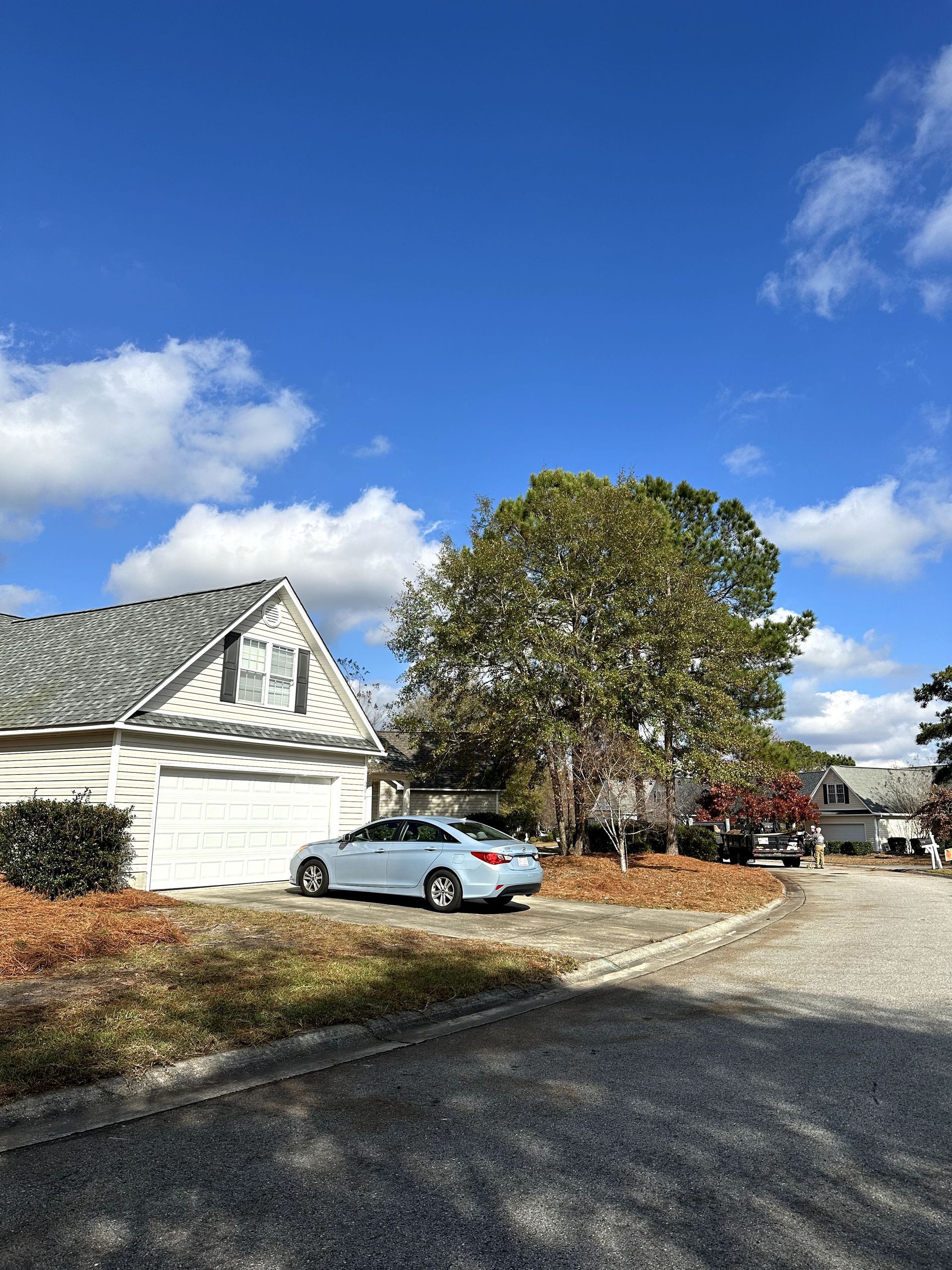
Each cut targets specific outcomes—reducing sail area in the upper canopy, eliminating rubbing branches that create entry points for disease, and removing deadwood that becomes projectile material in high winds. You'll see crews working through the canopy systematically rather than topping or shearing, because structural integrity depends on preserving the tree's natural taper and leaving collar tissue intact at each cut.
Once trimming is complete, your tree sheds wind more efficiently, sunlight reaches the interior canopy to support healthy foliage, and you no longer see limbs sagging toward structures or utility lines. The canopy looks lighter but retains its natural shape, and hazardous overhangs are gone.
Professional trimming takes longer than quick cuts because each limb is evaluated for its role in the tree's balance and health, and debris is cleared from your property as part of the service. Storm-damaged limbs and emergency situations are handled through dispatch capability that responds when you need immediate hazard removal..
Common Questions About This Service
Property owners in Wilmington often ask about timing, debris management, and what trimming actually accomplishes beyond appearance.
How often should trees be trimmed in coastal areas?
Most residential trees benefit from trimming every two to three years, though storm-prone species and those near structures may require annual attention to manage growth and remove weak limbs before hurricane season.
What happens to all the debris after trimming?
Branches and wood are removed from your property as part of the service, either chipped for disposal or hauled away depending on volume and material size.
Why does professional trimming cost more than a quick shape-up?
Selective limb removal requires evaluating each cut for structural impact and disease prevention, and work is performed to preserve the tree's health rather than simply reducing height or width quickly.
When is the best time to trim trees in Wilmington?
Late winter through early spring allows cuts to heal before the growing season, though hazardous limbs should be removed immediately regardless of timing.
What's the difference between trimming and topping?
Trimming removes specific limbs to improve structure and health, while topping indiscriminately cuts the canopy back and often leads to weak regrowth, decay, and structural failure.
Above All Arbor completes work that other crews leave unfinished and handles follow-up trimming when you need recurring maintenance to manage growth. Request an on-site assessment to review which limbs should be removed and how trimming will affect your tree's long-term structure.