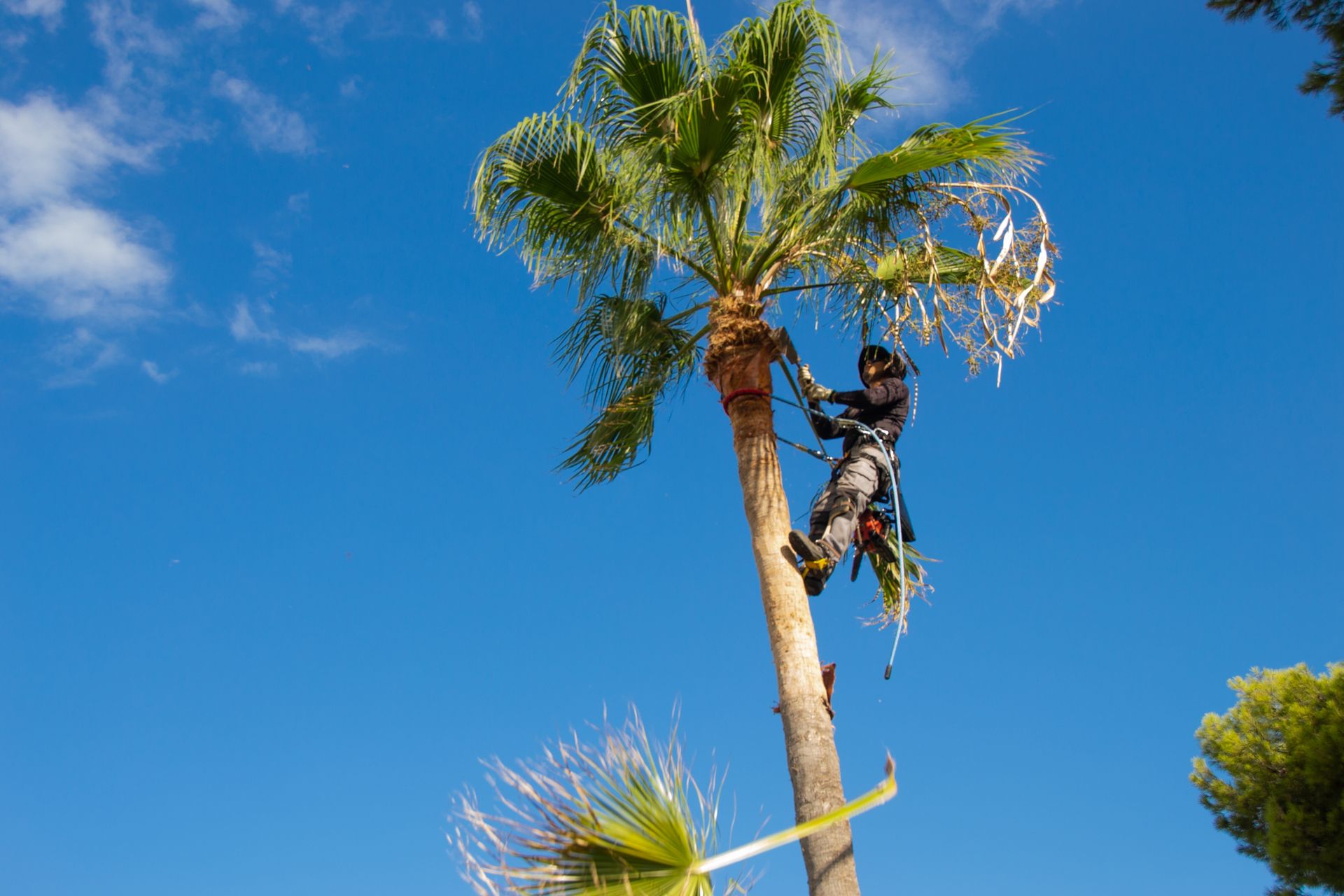
Dead Fronds Removed Without Damaging Tree Structure
Palm Tree Skinning in Wilmington for coastal properties with accumulated dead fronds and declining appearance
Palm trees in beach community landscaping accumulate dead fronds and loose skin that create fire risk, harbor pests, and detract from property appearance throughout coastal Wilmington. Dead material clings to the trunk for months after the frond dies, building up in layers that eventually require removal to restore the tree's health and visual appeal. Above All Arbor removes this dead material while preserving the tree's structure and growth points, focusing on frond elimination rather than aggressive trunk shaping that stresses the plant.
The skinning process targets fronds that have fully died and turned brown, along with loose bark and skin peeling away from the trunk. This selective removal differs from decorative shaping or aggressive trimming that cuts into living tissue. The work reduces fire fuel load around structures and eliminates nesting sites for rodents and insects that colonize dead frond clusters.
Request a property assessment to evaluate frond accumulation and determine the scope of skinning required for your palm trees..
Why Dead Frond Removal Matters for Coastal Trees
Removing dead fronds eliminates fire risk in dry conditions and prevents pest colonization in the dense material that accumulates near the trunk. The process involves cutting each dead frond at its base where it attaches to the trunk, rather than tearing or ripping material that could damage living tissue beneath. Loose skin and bark get peeled away carefully, exposing the clean trunk surface without gouging or scarring the wood.
After skinning completes, the palm shows a clean trunk free of hanging dead material and loose bark. The tree's canopy retains all living green fronds, maintaining its ability to photosynthesize and grow without stress from excessive cutting. Properties with multiple palms see immediate improvement in appearance and reduction in debris that falls during wind events, which is particularly noticeable after coastal storms pass through New Hanover County.
Skinning does not include treatment for disease, insect infestation, or structural damage to the trunk. Trees showing rot, significant pest activity, or trunk splitting may require evaluation beyond cosmetic frond removal. The service focuses on exterior maintenance rather than corrective measures for underlying health issues..
Common Questions About This Service
Coastal property owners with palm trees frequently ask about the difference between skinning and trimming, along with timing and frequency considerations for frond removal.
What is the difference between palm tree skinning and regular trimming?
Skinning removes only dead fronds and loose bark, leaving all living green fronds intact, while trimming may include cutting living material for shape or size control, which can stress the tree and slow growth.
How often do palm trees in Wilmington need skinning?
Most coastal palms accumulate enough dead fronds to warrant skinning every twelve to eighteen months, though trees in high-wind areas or those damaged by storms may require more frequent attention to remove broken or dying material.
What happens to the dead fronds after they are removed?
Dead fronds and bark get sectioned and removed from the property rather than left in piles, preventing fire hazards and eliminating the breeding material that attracts pests to your landscaping.
When should I schedule skinning instead of waiting for fronds to fall naturally?
Schedule removal when dead fronds begin accumulating in thick layers near the trunk or when they start dropping during wind events, creating debris around the property and increasing fire risk during dry periods.
Why do some palm trees have more dead fronds than others in the same area?
Frond die-off varies based on tree age, species, water availability, and recent storm damage, with older palms and those in sandy soil showing faster accumulation of dead material that requires regular removal to maintain appearance and safety.
Above All Arbor has serviced coastal properties with palm tree maintenance for two years, focusing on dead material removal that preserves tree health. Schedule a consultation to review your palm trees and determine the appropriate skinning approach for your property's landscaping.