Properties Restored After Severe Weather Passes
Storm Damage Cleanup in Wilmington for yards with fallen trees, split limbs, and debris from hurricane events
Atlantic hurricane season and nor'easters snap branches and fell trees across coastal New Hanover County with predictable frequency, leaving residential properties covered in debris that blocks access and creates ongoing hazards. Split trunks lean against structures, uprooted root systems obstruct driveways, and scattered limbs prevent yard use and rebuilding operations. Above All Arbor removes this storm debris systematically, starting with hazard assessment of compromised standing trees and progressing through sectioning, debris removal, and stump grinding to return properties to usable condition after severe weather events.
The cleanup process evaluates which trees sustained structural damage severe enough to warrant complete removal versus pruning of broken limbs. Trees with split trunks, exposed root systems, or significant crown loss get felled and sectioned before they fail unpredictably. Debris gets cleared from structures, yards, and access routes, with material either processed on-site through mulching or hauled away depending on volume and property needs.
Schedule a post-storm assessment to identify compromised trees and determine the scope of debris removal required for your property..
How Storm Debris Gets Cleared Systematically
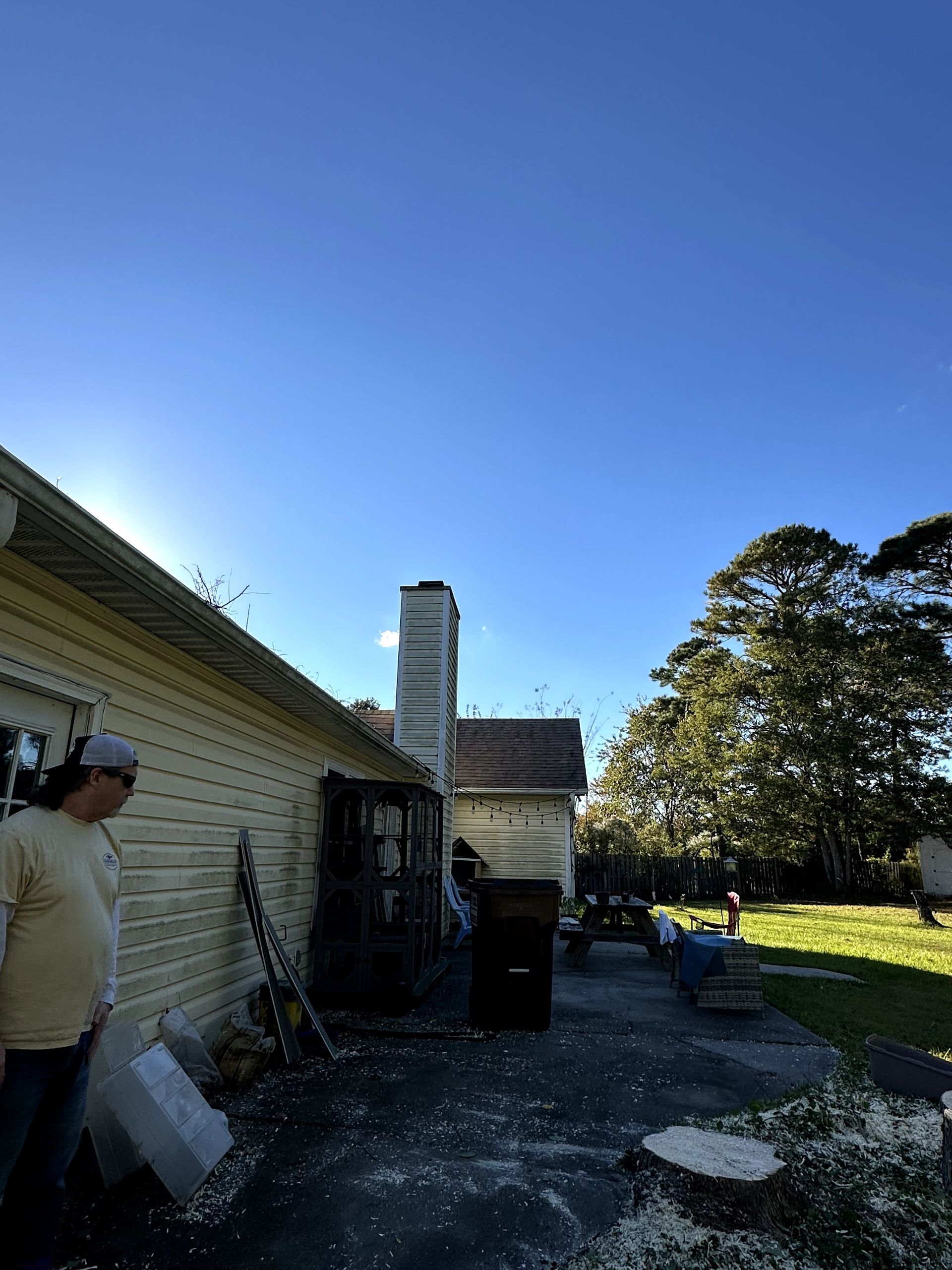
Cleanup begins with identifying trees that are leaning, cracked, or partially uprooted, as these pose immediate re-failure risk during subsequent wind events. The operator fells compromised trunks using directional cuts that control where they land, sections large pieces to manageable sizes, and grinds stumps to grade level so they do not interfere with rebuilding or landscaping. Scattered limbs and branches get gathered, processed, and removed, clearing yards for equipment access and restoration work.
Your property shows cleared ground with debris removed, hazardous trees eliminated, and access restored for construction equipment or insurance adjusters. Yards transition from impassable debris fields to open spaces ready for repair work, and standing trees no longer pose immediate failure risk from storm-induced damage. In tight residential neighborhoods common throughout Wilmington, the cleanup opens driveways and restores access that allows other contractors to begin structural repairs and rebuilding operations.
Storm cleanup does not include structural repairs to buildings, fence reconstruction, or landscaping restoration beyond tree and debris removal. The service focuses on clearing organic material and eliminating tree hazards, leaving properties ready for contractors to address building damage and homeowners to begin replanting or grading. Properties with extensive stump counts or root system damage may require additional excavation work beyond standard grinding operations..
What Property Owners Usually Ask
Storm damage questions typically focus on timing, insurance coordination, and the difference between emergency hazard removal and comprehensive property cleanup after severe weather.
What is the difference between emergency tree service and storm damage cleanup?
Emergency service removes immediate hazards like trees on structures or blocking critical access, while storm damage cleanup addresses the full scope of debris, compromised trees, and yard restoration after the emergency phase concludes and conditions stabilize.
How does storm cleanup work with insurance documentation in Wilmington?
The operator can coordinate with adjusters by documenting damage before removal, photographing compromised trees and debris fields, and providing detailed records of material removed, which supports claims processing for storm-related property damage.
What happens to trees that are damaged but still standing after a storm?
Trees with structural cracks, split trunks, or significant root exposure get evaluated for stability, and those showing high re-failure risk are removed before the next weather event, preventing additional property damage from delayed collapse.
When should I schedule storm cleanup instead of handling debris myself?
Schedule professional cleanup when fallen trees exceed hand-tool capacity, when compromised trees require safe felling and rigging, or when debris volume makes manual removal impractical, particularly after hurricanes that deposit multiple large trees across residential lots.
Why do some coastal properties take longer to clean up than others after the same storm?
Cleanup duration depends on tree density, debris volume, equipment access through saturated soil, and whether standing trees sustained hidden structural damage that requires careful assessment and removal beyond simply clearing already-fallen material.
Above All Arbor completes cleanup projects that other operators abandon, particularly on properties with complex debris conditions or access constraints in residential neighborhoods. The service handles removals in tight spaces where precision work prevents further property damage during cleanup operations. Call to arrange a post-storm site visit and receive a detailed cleanup estimate based on actual debris conditions and tree damage across your property.