Trees Removed Without Leaving Risk Behind
Tree removal in Wilmington for hazardous, diseased, and storm-damaged trees
A tree leaning toward your home after a storm or showing extensive decay at the base creates a timeline you can't ignore, and partial removal or delayed action leaves the hazard in place. Above All Arbor removes trees from residential and commercial properties across coastal New Hanover County, extracting the entire structure including root management and clearing debris so your site is ready for replanting or other use. The tree is gone, the stump is addressed separately if needed, and you no longer face the risk of failure during the next wind event.
Coastal weather patterns in this region produce frequent storm damage, and older trees in established beach communities often develop structural issues that make removal necessary before failure occurs. Full extraction involves rigging limbs and trunk sections in sequence to prevent property damage during the process, managing root systems that affect nearby hardscapes, and restoring the site to a condition that supports future landscaping.
Arrange an evaluation to determine whether your tree requires immediate removal or can be monitored..
What You Notice Once Removal Is Finished
The tree is sectioned and lowered in controlled stages, rigging prevents damage to surrounding structures, and all wood and debris are cleared from your property. High-complexity removals that other providers decline—trees near power lines, multi-trunk specimens, or storm-damaged leaners—are handled through equipment and rigging that controls descent and protects your home.
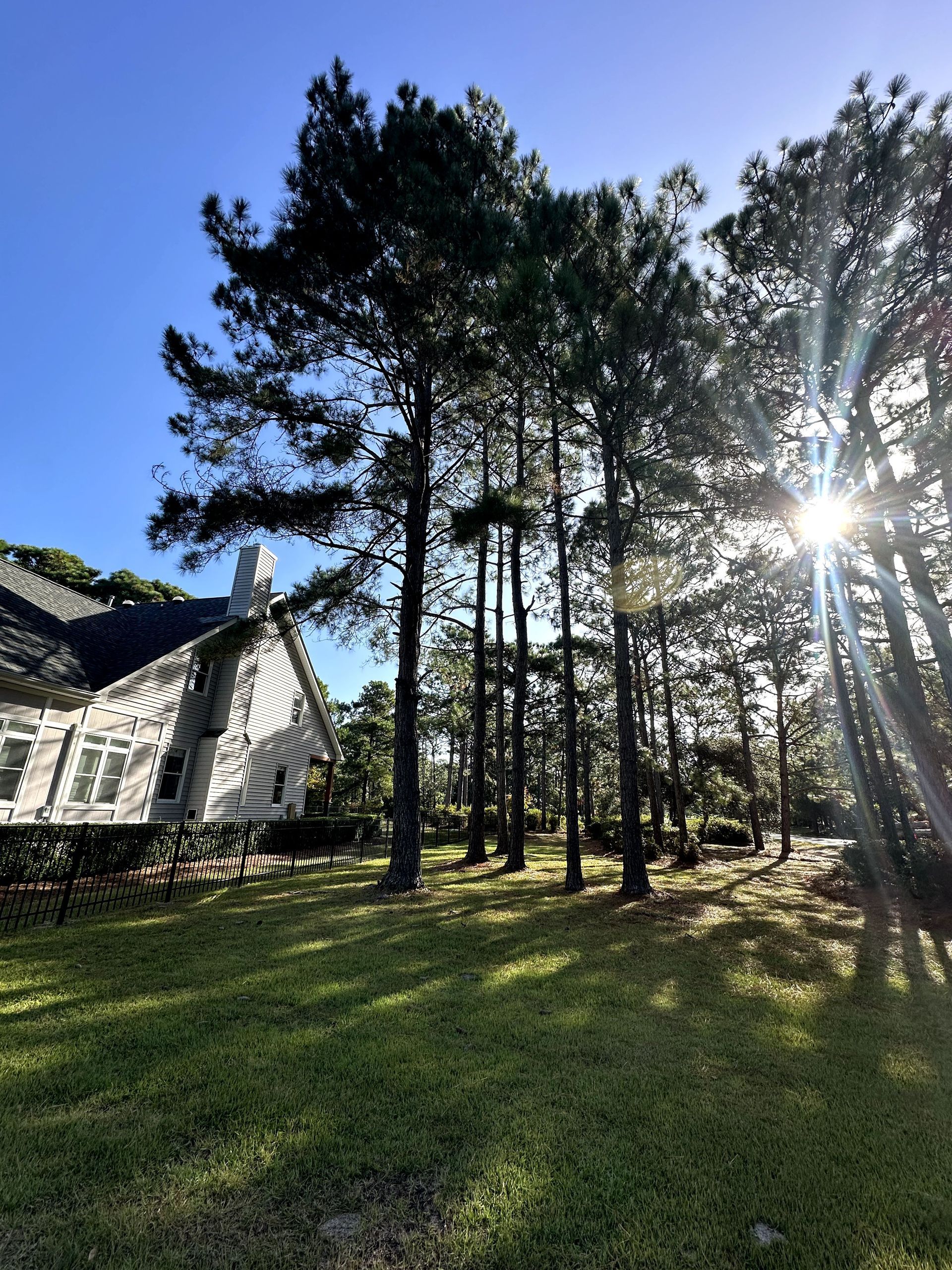
After removal, your property no longer has the overhead hazard, sunlight reaches areas that were previously shaded, and the site is cleared for sod installation or replanting if you choose to restore the landscape. Emergency tree service dispatch capability means storm damage is addressed quickly when trees fail and block access or threaten structures.
Root systems are managed based on proximity to foundations, driveways, and utilities, and stump grinding is available separately to eliminate tripping hazards and prepare the site for new use. Two years of operational experience includes completing jobs that other crews abandon and responding to emergency calls when weather creates urgent removal needs..
What Property Owners Usually Ask
Removal decisions often hinge on safety, cost factors, and what happens to the site afterward.
How much does tree removal cost in Wilmington?
Pricing depends on tree size, proximity to structures, accessibility for equipment, and whether the tree is still standing or has already failed, with storm damage removals often requiring emergency dispatch and rigging to manage unstable trunks.
What happens to the stump after the tree is removed?
The stump remains unless you schedule grinding, which takes it below ground level and allows you to replant or restore the area without the obstacle.
Why would a removal company decline a job?
High-risk removals near power lines, multi-leader trees with unpredictable failure points, or storm-damaged leaners require specialized rigging and experience that not all providers maintain.
When should I remove a tree instead of trimming it?
Removal is necessary when decay extends through the trunk, the tree leans significantly toward structures, root damage has destabilized the base, or storm damage has compromised structural integrity beyond what trimming can address.
How long does a typical tree removal take?
Removals range from a few hours for small trees with clear access to a full day or more for large specimens requiring rigging and sectional lowering in tight spaces near homes.
Above All Arbor handles storm damage cleanup and takes on removals other companies won't complete, with equipment and dispatch capability that responds when trees create immediate hazards. Schedule a site visit to assess removal requirements and confirm whether your tree presents an urgent risk.