Stumps Ground Below Grade Level
Stump grinding in Wilmington for tripping hazards and replanting site preparation
A stump left after tree removal creates a tripping hazard, blocks mowing and landscaping equipment, and prevents you from replanting or restoring turf in that area. Mechanical grinding takes the stump below ground level, typically six to eight inches down, and removes the obstacle so your yard is safe to walk across and the site is ready for sod installation or new planting. Above All Arbor grinds stumps across coastal New Hanover County following tree removal, and once the work is complete the area is graded to match surrounding terrain and debris is cleared so water drains properly and you're left with a usable surface.
High-volume storm damage in this region creates recurring stump removal demand, and established beach communities often have multiple stumps from older trees that require grinding before landscaping projects can proceed. The process involves grinding wood and root tissue into mulch-like material, removing or redistributing that debris based on your preference, and grading the site so it doesn't sink or collect water after settling.
Arrange a property evaluation to identify stumps that need grinding and confirm site preparation requirements.
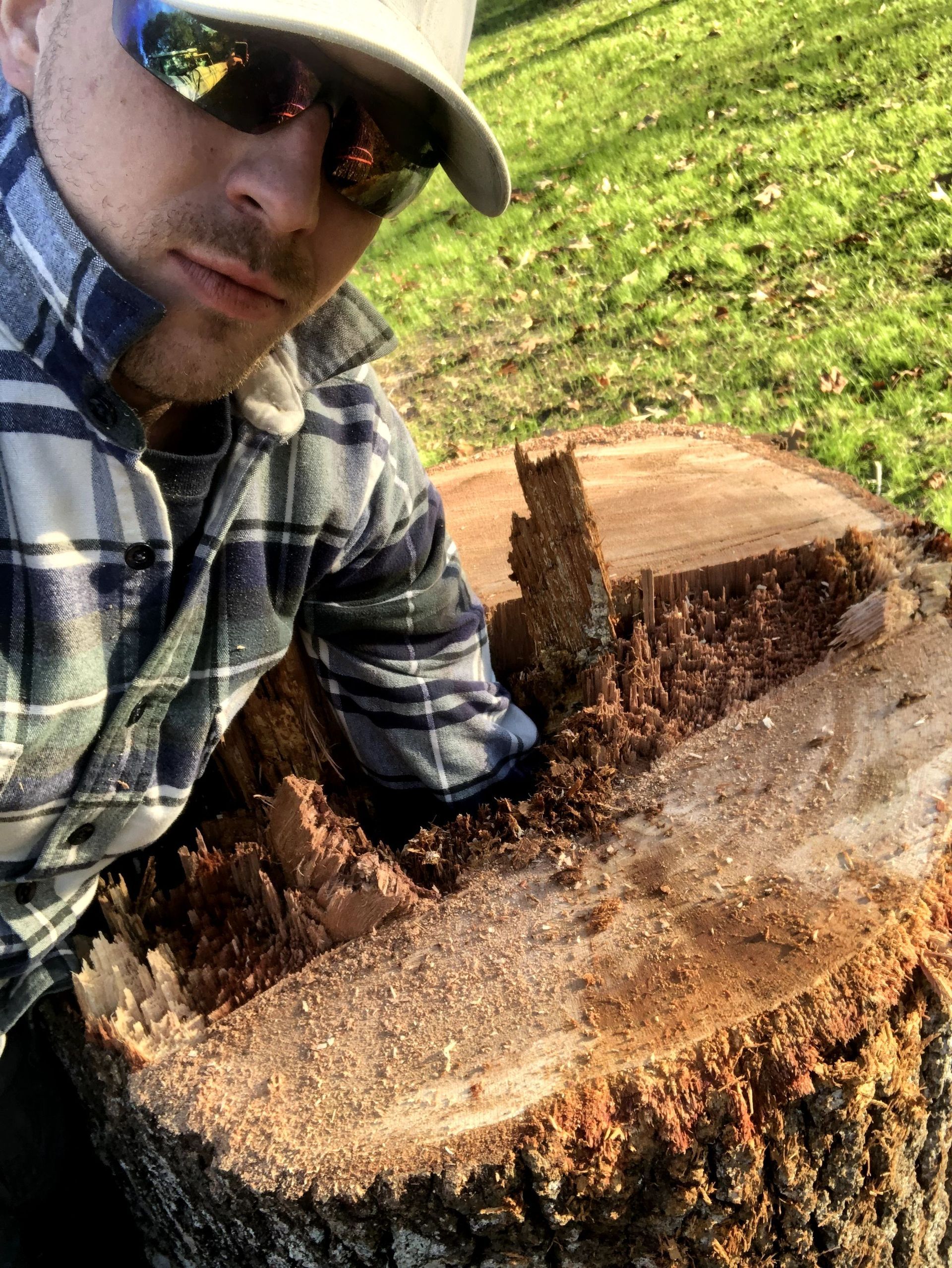
What Stump Grinding Actually Accomplishes
The grinder reduces the stump to chips and sawdust below the soil line, eliminating the visible obstacle and allowing roots to decay naturally underground without affecting surface use. Debris from grinding is either hauled away or spread across the site as mulch, depending on volume and whether you plan to replant immediately.
After grinding, your yard no longer has the raised stump blocking foot traffic or equipment, the area can be seeded or sodded without the root mass interfering, and mowing no longer requires working around the obstacle. The ground settles over time as underground roots decompose, so grading and soil addition may be needed later to maintain a level surface.
Emergency service capability handles cleanup work when storms create multiple stump removal needs across a property, and grinding is scheduled after tree removal to complete site restoration in one workflow. Standard practice includes answering questions about debris disposition and what happens to the mess after grinding, so you know what to expect before work begins..
Common Questions About This Service
Stump grinding decisions often involve cost, timing, and what the site will look like after the work is finished.
How much does stump grinding cost in Wilmington?
Pricing depends on stump diameter, root spread, accessibility for equipment, and whether multiple stumps are ground in one visit, with larger stumps requiring more time and blade wear.
What happens to the mess after stump grinding?
Wood chips and debris are either removed from your property or spread across the area as mulch, depending on whether you want the material left for landscaping or hauled away completely.
Why can't I just dig out the stump myself?
Root systems extend far beyond the visible stump and often weigh hundreds of pounds, making manual removal impractical without excavation equipment that damages surrounding landscape and hardscapes.
When should I schedule stump grinding after tree removal?
Grinding can happen immediately after removal or later depending on your timeline, though waiting allows you to coordinate with other landscaping work and avoid multiple equipment visits to your property.
How deep does stump grinding go in coastal soils?
Grinding typically reaches six to eight inches below grade, deep enough to eliminate the obstacle and allow replanting, though sandy soils make deeper grinding easier compared to clay or rocky ground.
Above All Arbor completes cleanup following incomplete competitor jobs and handles stump grinding as part of integrated tree removal and site restoration services. Call to schedule grinding and confirm debris removal preferences for your property.