Hazardous Trees Removed Before Further Damage Occurs
Emergency Tree Service in Wilmington for fallen, leaning, or storm-damaged trees threatening structures and safety
Coastal wind events and hurricane season routinely cause tree failure across residential neighborhoods in New Hanover County, leaving trunks leaning against homes, limbs resting on roofs, and root systems partially uplifted. Above All Arbor provides same-day assessment and removal of these hazardous trees around the clock, operating when storms pass and conditions allow safe access to damaged properties in Wilmington and neighboring beach communities. Rapid response prevents further structural damage and eliminates safety hazards that threaten occupants and adjacent properties.
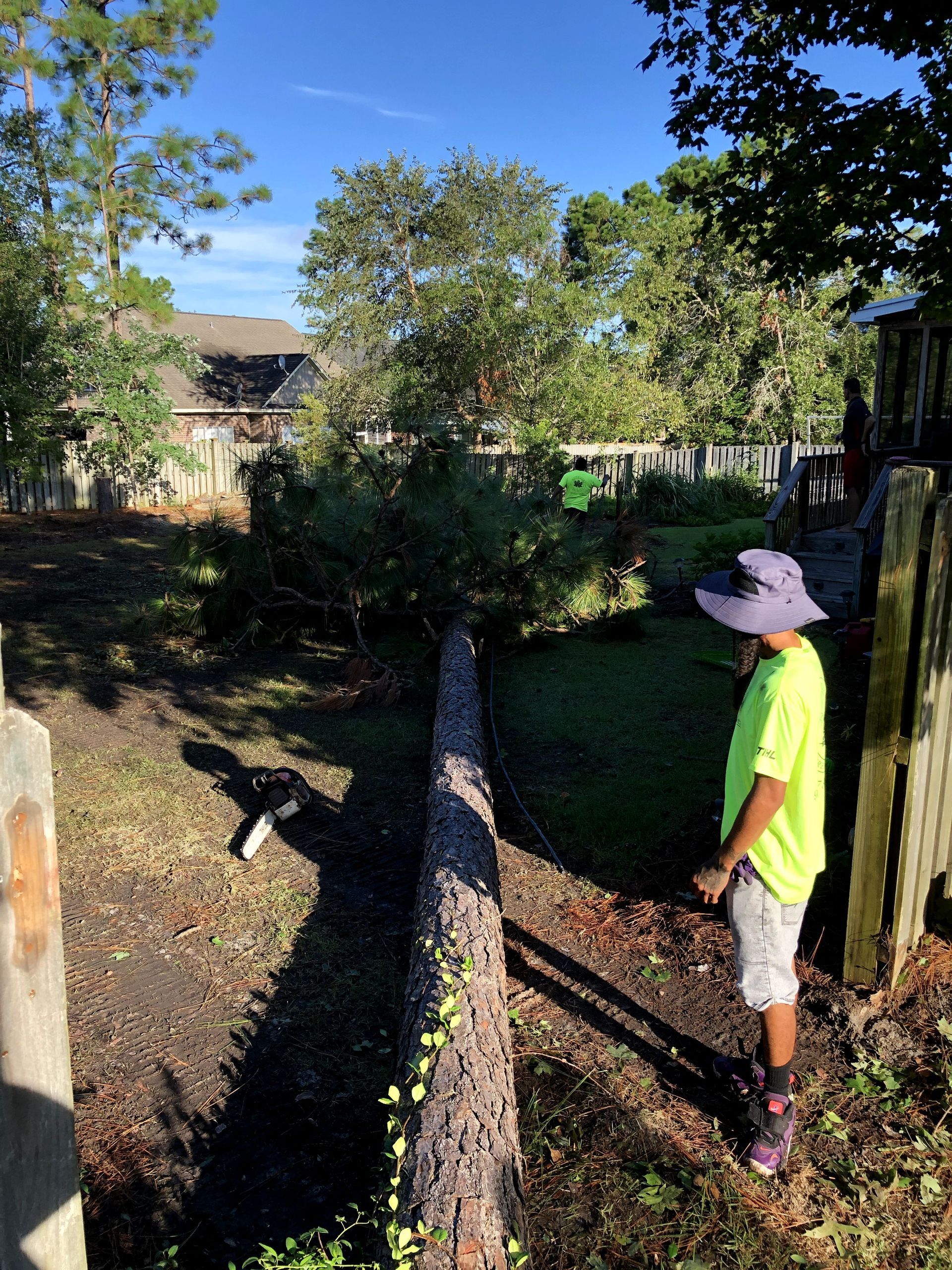
Emergency removal addresses trees that have already failed or are actively failing under wind, rain, or soil saturation. The operator sections large limbs positioned over structures, safely lowers compromised trunks without causing additional impact damage, and clears debris blocking access routes or utility lines. Work focuses on immediate hazard elimination rather than comprehensive cleanup, though full debris removal can follow once the emergency phase concludes.
Call directly for same-day response when a tree has fallen or is leaning dangerously on your property..
What Changes After Emergency Hazards Are Removed
Emergency tree removal requires rigging and sectioning techniques that control where heavy wood lands during cutting. The operator evaluates which cuts will release tension safely, how much weight each limb or trunk section carries, and what sequence prevents sudden shifts that could damage structures or injure personnel. Trees leaning on homes get sectioned from the top down in manageable pieces rather than felled in one cut that would increase impact force.
Your property transitions from an active hazard condition to a secured site where the immediate threat no longer exists. Roofs no longer bear the weight of fallen limbs, power lines are cleared of contact with trees, and access routes open for additional repair work or insurance assessment. The tree that was actively threatening your home or creating danger for occupants is sectioned and removed, though stump grinding and comprehensive debris cleanup typically follow as separate operations after the emergency resolves.
High-risk removals near power lines require coordination with utility companies before work begins. Trees in contact with energized lines cannot be cut safely until power is disconnected, and some utility easement work falls under the provider's jurisdiction rather than private tree services. The operator handles removals that other contractors abandon due to complexity or risk level, particularly in tight residential spaces where equipment access is limited and precision cutting is required..
Answers to Frequent Service Questions
Property owners facing tree emergencies after storms or sudden failures typically ask about response times, safety protocols, and what gets addressed during the initial emergency visit versus follow-up cleanup.
What qualifies as an emergency tree situation requiring immediate response?
Trees that have fallen on structures, are actively leaning and shifting, block critical access routes, or contact power lines require same-day removal to prevent further damage and eliminate immediate safety threats to occupants and neighboring properties.
How quickly can emergency tree service reach my property in Wilmington after a storm?
Response time depends on storm severity, road access conditions, and demand volume, but Above All Arbor prioritizes properties with trees actively threatening structures or creating life-safety hazards as soon as conditions allow safe operations.
What happens during the emergency removal versus follow-up cleanup?
Emergency work focuses on removing the immediate hazard by sectioning and clearing the fallen or leaning tree from structures and access routes, while comprehensive debris removal, stump grinding, and yard restoration typically occur as scheduled follow-up services.
When should I call for emergency service instead of waiting until morning?
Call immediately if a tree has fallen on your home, is leaning and shifting position, blocks all property access, or threatens to fall and cause additional damage, as further structural impact or injury risk increases with delayed response.
Why do some emergency tree removals cost more than scheduled tree services?
Emergency work involves higher risk, requires specialized rigging and sectioning techniques, occurs outside normal business hours, and prioritizes rapid mobilization over scheduling efficiency, all of which increase operational costs compared to planned removal projects.
Above All Arbor operates solo with full equipment capability, handling complex removals that other services do not complete. The operator specializes in high-risk situations near homes and utility infrastructure across coastal New Hanover County. Reach out by phone when you need immediate hazard assessment and emergency tree removal.